
The theater lights dropped low in New York City, and thousands held their breath. Nobody knew quite what would happen when the quiet acoustic guitar began to ring out through the dark hall.
Joan Baez was marking seventy-five years on this earth, standing center stage at the Beacon Theatre. She had spent a lifetime marching, singing, and defying power, from Woodstock to war protests.
Beside her stood Paul Simon, seventy-three years old, holding his guitar with quiet focus. London folk icon Richard Thompson joined them with his own strings tuned and waiting.
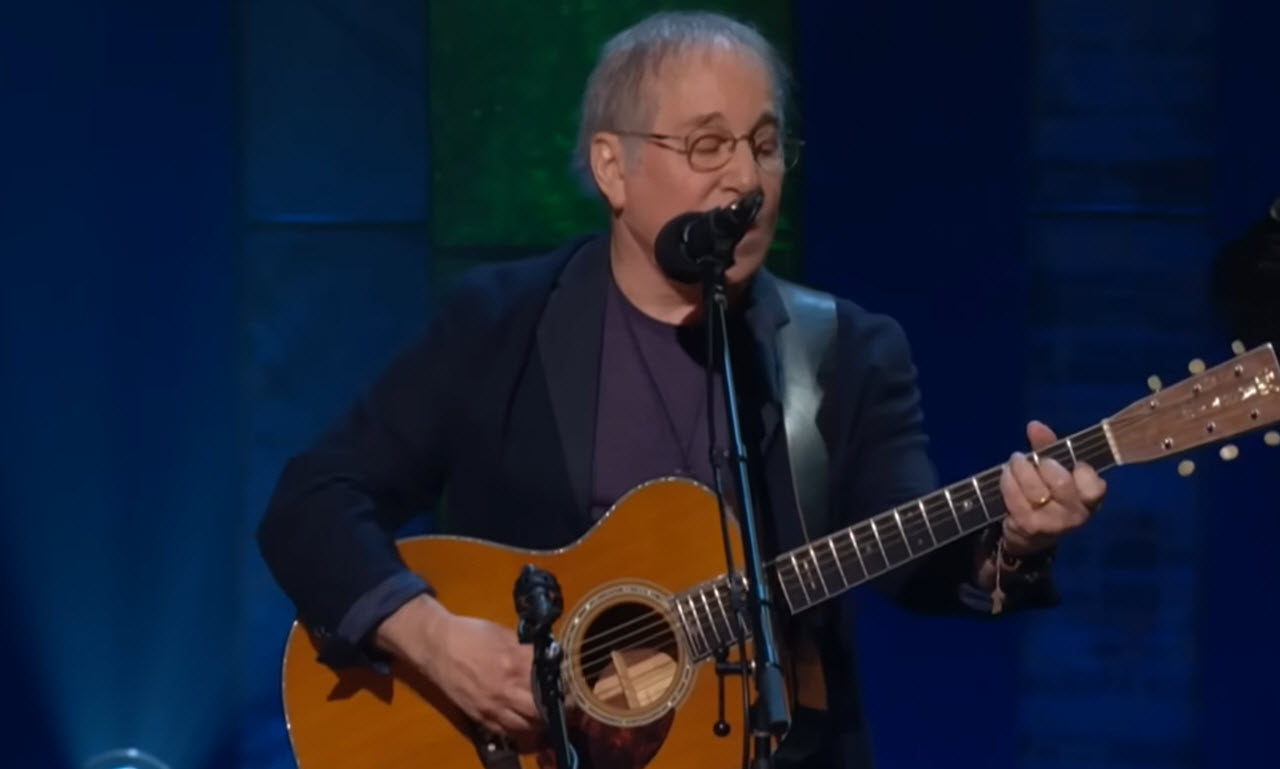
Two old voices prepared to face an anthem they had carried across a fractured century.
Cameras rolled for PBS, but this was far from television spectacle. It was a raw reckoning with time, captured for what would become ten million stunned viewers across the globe.
So the opening chords drifted into the crowd.
The track was Simon and Garfunkel’s 1969 masterpiece from Bridge Over Troubled Water. It was a song born of weary streets, lonely corners, and stubborn endurance.
And then, their weathered harmonies locked together.
Their voices were aged like fine wine, steeping the song with far more meaning than it once contained. The polished sheen of youth was long gone, replaced by gravel, grit, and warmth.
“I am older than I once was / And younger than I’ll be; that’s not unusual.”
The line echoed through the theater, bittersweet and beautiful. Every ex-hippie in the seats felt the sting of passing decades, watching two pioneers stare down their own mortality.
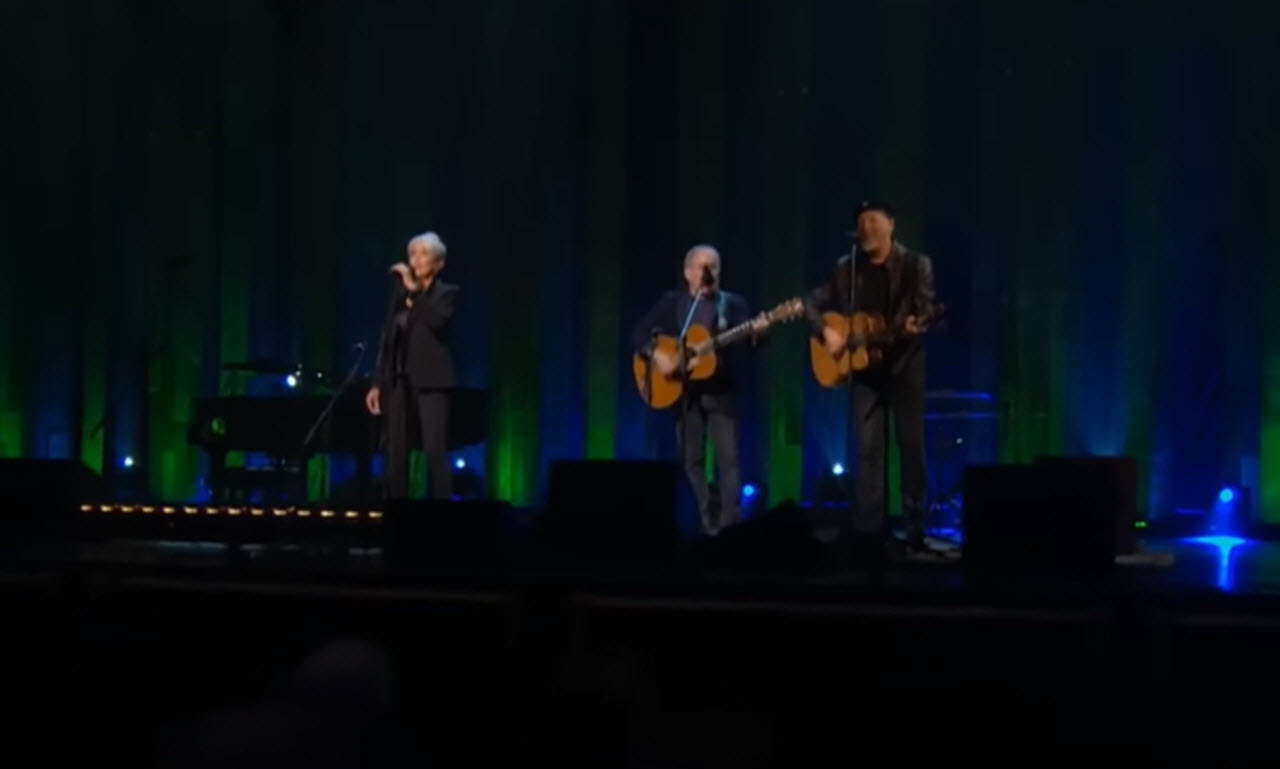
“After changes we are more or less the same.”
No one had forgotten their distant past. Baez had sung this tune alone in Oakland back in 1981, and alongside Simon himself at the Bread and Roses benefit in 1982.
Only dusty audio clips survived from that long-ago night, hidden away on digital archives.
Yet here they stood in 2016, living proof of resilience. Simon picked through the changes, Thompson held the bottom end, and Baez lifted the melody with unflinching pride.
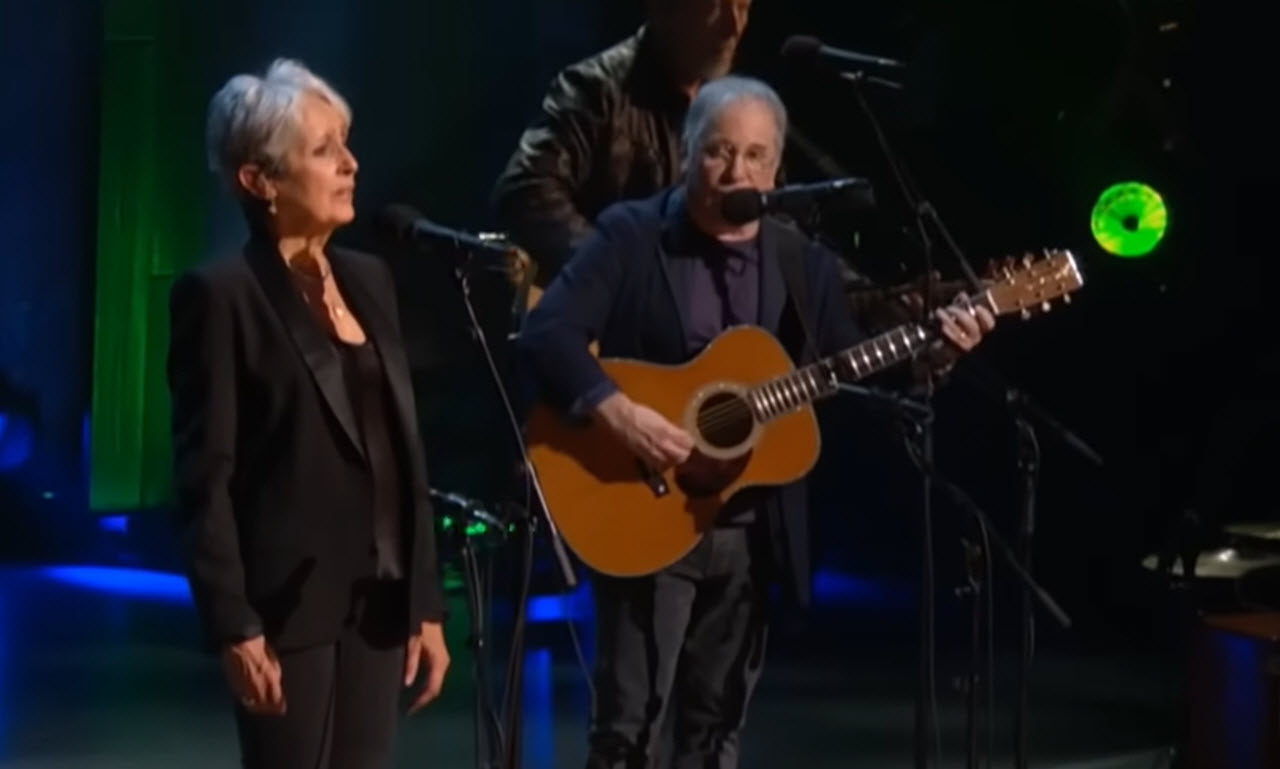
The whole room felt suspended between sixty years of memories and one fading note.
It was just one peak of a massive twenty-two-track birthday bash. David Crosby had joined her for The Beatles’ classic Blackbird, with Damien Rice and Mary Chapin Carpenter sharing the stage.
She closed the massive night alone with Dylan anthems, finishing on Forever Young.
And this single night launched an urgent eighteen-date North American tour alongside Amnesty International, dedicated to fighting racial and ethnic disparities in American prisons.
Justice and melody remained woven tight, just as they had been across twenty-four albums.
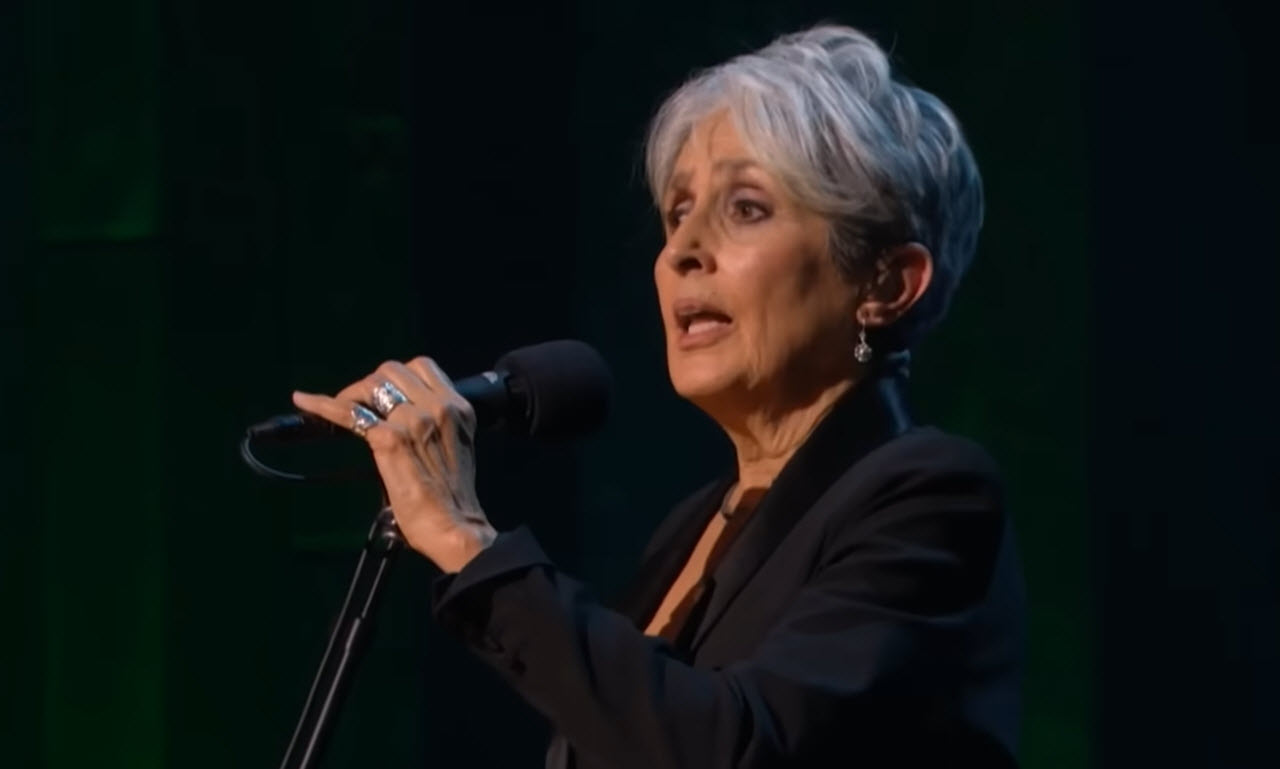
She had marched with Martin Luther King Jr., loved Dylan and Jobs before the world knew their names, and defended marginalized voices without flinching. But in that soft hall, politics yielded to pure communion.
The final chord rang out, hanging in the stillness before the roar began.
