
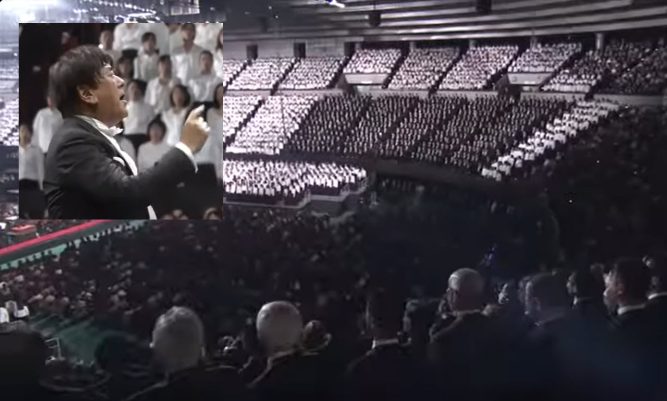
People think Texas does everything bigger. Or maybe they point to a massive rock band playing in a field. That may be true, but they are small compared to some.
If you want to see big, you have to turn your sights on Japan. Because every December since 1983, a crowd of 10,000 people gathers there to sing together.
They perform the final choral movement of Beethoven’s Ninth Symphony. And when you add the full orchestra, the scale becomes hard to believe.
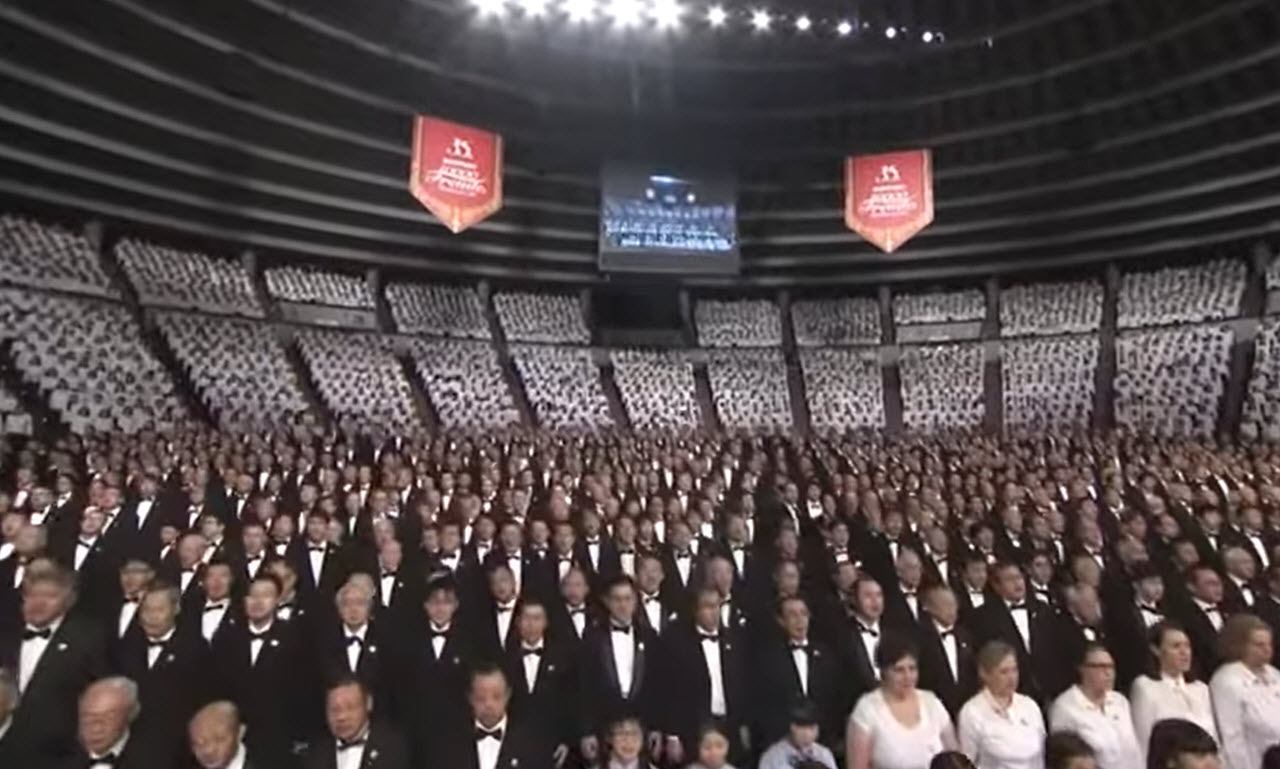
Ten thousand amateurs were about to sing in a foreign language.
Yutaka Sado has led this massive group since 1999. He trained under Seiji Ozawa and Leonard Bernstein before taking over Austria’s Tonkunstler Orchestra in 2015.
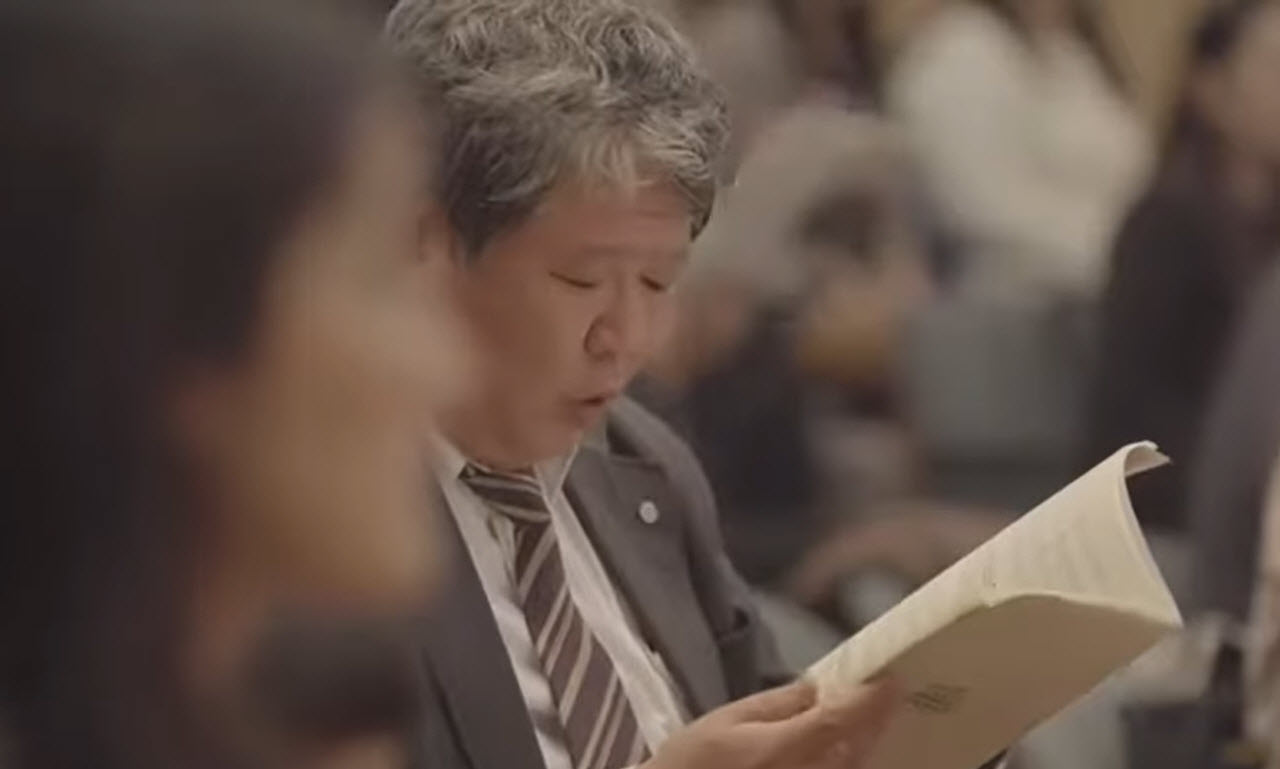
Most of the singers on stage are not professionals. They are regular people who apply for a spot, and the demand is always higher than the open seats.
One viewer named Jonathan Lauzon left a comment online about a 2011 recording. “Composed by a German legend, sung by a Japanese multitude, gave chills to a Canadian nobody.”
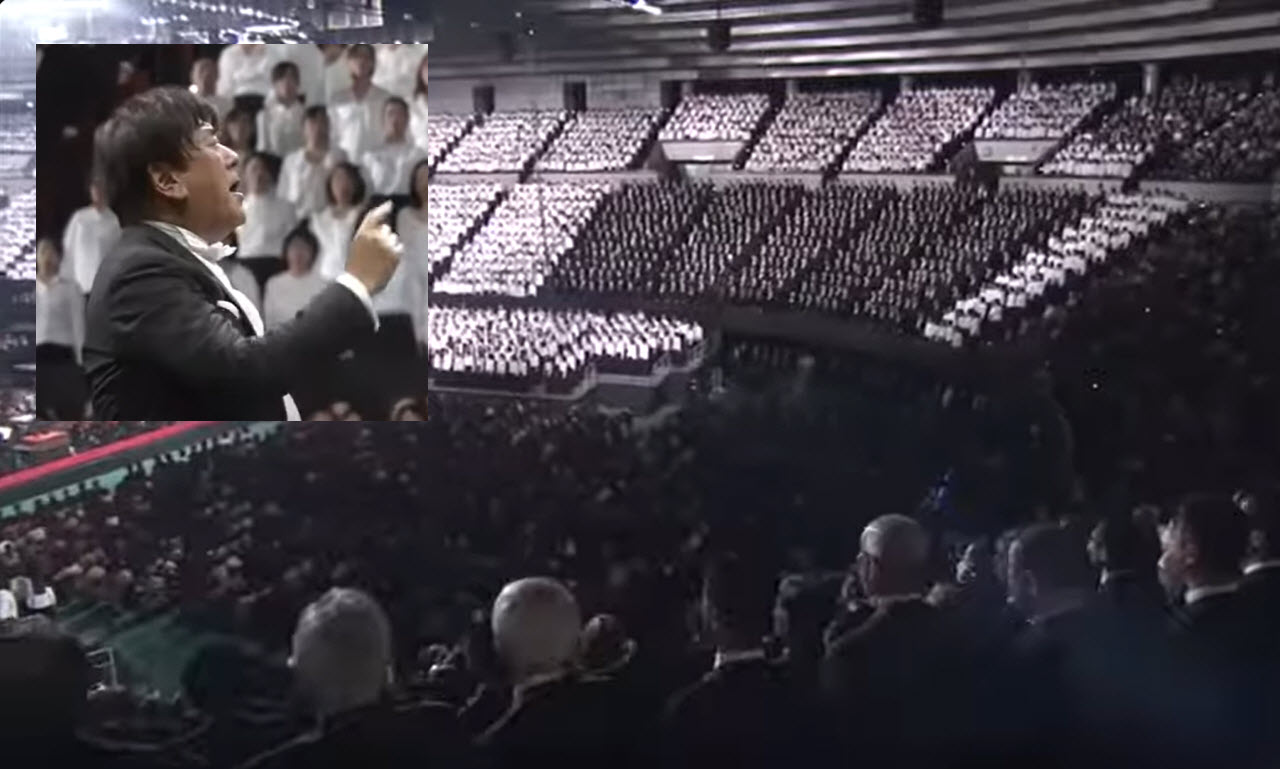
Another commenter, GoodVibes1997, noticed the technical skill. “As a German, I’m impressed by the perfect pronunciation, the orchestra & the sheer number of musical talent.”
In Japan, this piece of music is tied directly to the Christmas season. You can hear hundreds of performances in shopping malls, community centers, and concert halls.
People often join singalongs for the fourth movement, known as Ode to Joy. Friedrich Schiller wrote the original poem back in 1785 to celebrate peace and hope.
Getting 10,000 people to sing on cue is only half the battle.
Yutaka Sado talked about the real pressure he feels on the podium. “Having 10 000 singers is amazing, but if they’re not into it, it would be depressing. I need to make them feel like they’re not one of 10 000; that everyone has the main role. That’s been my biggest challenge from the first year and still is today.”
But this holiday tradition did not start in a fancy concert hall. It actually began inside a prison camp during the final days of World War One.
Roughly 1,000 German prisoners of war were held at Bando Camp. The guards treated them well, and the prisoners played sports and shared culture with the locals.
A prisoner named Paul Engel got permission to teach music inside the camp. Twice a week, he also walked outside to give lessons to interested Japanese neighbors.
The camp soon had two 45-piece orchestras, two brass bands, and two choirs of 60 singers each.
Over 80 prisoners spent months practicing Beethoven’s Ninth. They played it in Barrack One on June 1, 1918, marking the very first performance of the piece in Japan.
A century later, a global crisis threatened to stop the music completely.
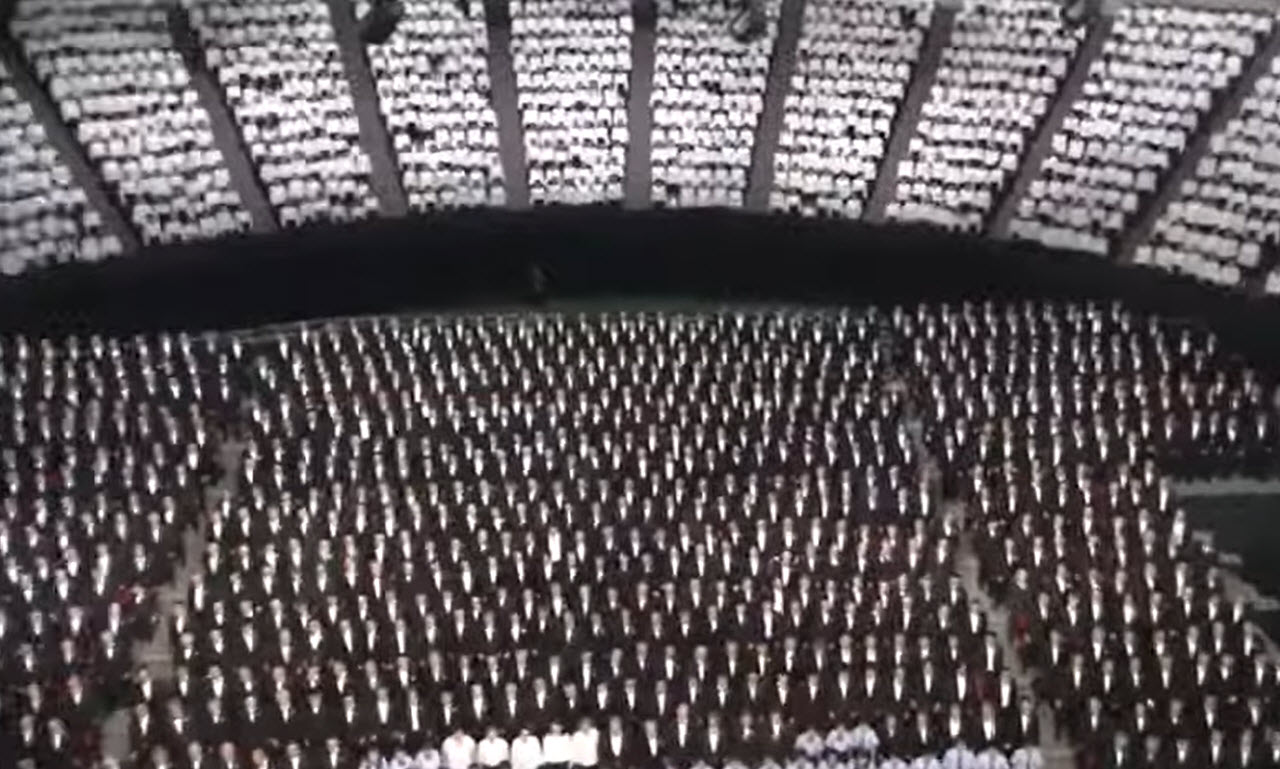
Known locally as Daiku, the event faced a major test in 2020. That year was the 250th anniversary of Beethoven’s birth, and the pandemic shut down live crowds.
So the organizers moved the concert online for the first time. Exactly 11,961 people sent in singing videos from around the world to join the live orchestra.
By 2021, the event returned as a mix of live singers and virtual clips.
Toshiaki Kamei runs the All-Japan Association of Daiku Choral Societies. He explained why this German symphony still means so much to people in Japan today.
“Nowadays, we observe many conflicts between different religions or different ethnic groups happening around the world. We believe singing Daiku together with people from various cultural backgrounds helps us learn to accept diversity and promote world peace.”
