
The Trump administration opened the new year by releasing revised dietary guidelines for Americans, but the rollout was quickly met with criticism from health experts. Many say the guidance is being presented as common sense while quietly reversing years of nutrition advice.
The updated recommendations were announced on January 7 by Health Secretary Robert F. Kennedy Jr as part of his Make America Healthy Again campaign. While the message focuses on simplicity and real food, critics argue the substance raises serious concerns.
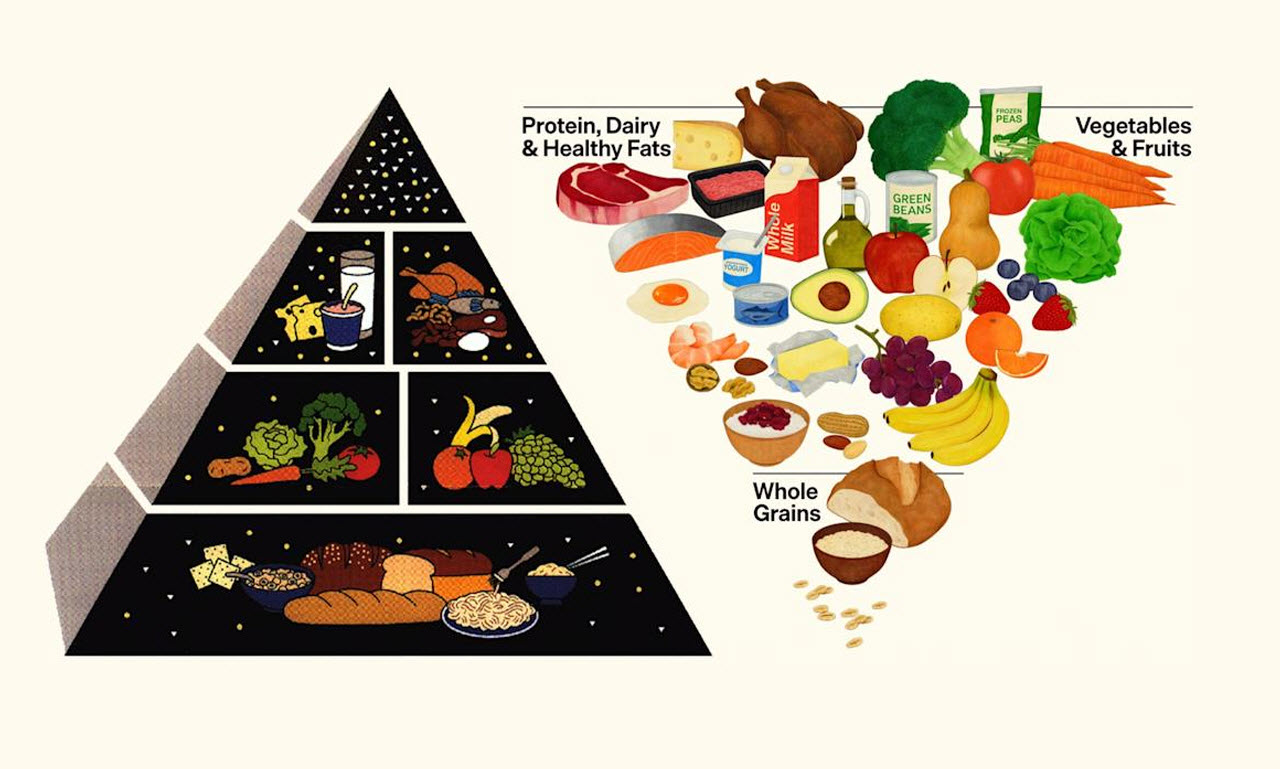
Under the new guidance, Americans are encouraged to prioritize red meat, cheese, vegetables, and fruits, while also incorporating saturated fats into their diets. That alone marks a sharp break from long-standing advice that treated saturated fat as something to limit.
The changes represent a major shift away from the MyPlate model introduced in 2011. That framework emphasized grains as the foundation of a healthy diet, with fruits and vegetables next, followed by smaller portions of protein, dairy, and fats.
Kennedy’s overhaul flips that structure, placing protein, dairy, and healthy fats at the center along with fruits and vegetables. Whole grains now make up the smallest portion, signaling a clear reversal of previous federal guidance.
Officials say the goal is to increase protein intake, recommending 1.2 to 1.6 grams per kilogram of body weight per day, up from 0.8. The plan also aims to steer people away from ultra processed foods and toward more natural options, summed up by the phrase eat real food.

At the press conference, Kennedy said: “Protein and healthy fats are essential and were wrongly discouraged in prior dietary guidelines.” He also stated: “We are ending the war on saturated fats.” Those remarks immediately drew pushback from nutrition experts.
One expert reacted by saying: “I’m very disappointed in the new pyramid that features red meat and saturated fat sources at the very top, as if that’s something to prioritize. It does go against decades and decades of evidence and research.” Others expressed similar concerns in interviews.
Health organizations have long warned that diets high in saturated fat, sodium, and calories increase the risk of heart disease, stroke, and obesity. Despite that, the new guidelines raise the saturated fat limit to 10 percent of daily intake.
The revised guidance also changes alcohol recommendations by removing specific daily limits for men and women. Instead of numeric guidance, it now offers the general advice: “Consume less alcohol for better health.”
