
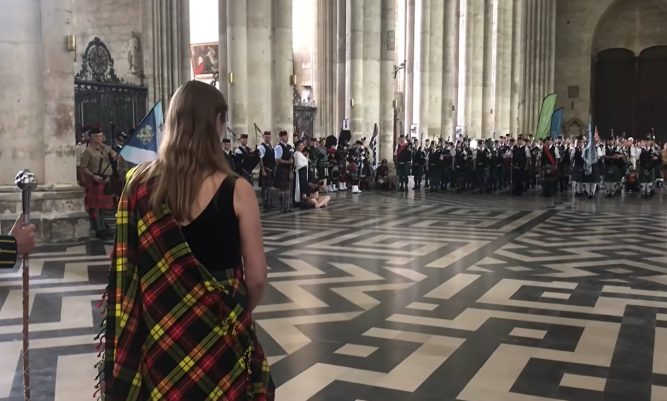
One woman stood inside a massive thirteenth-century building in northern France. She had no microphone. Just her voice and centuries of cold stone surrounding her.
It was July 2018. Hundreds of people packed the space to mark a century since the final year of the First World War. The air felt heavy with history.
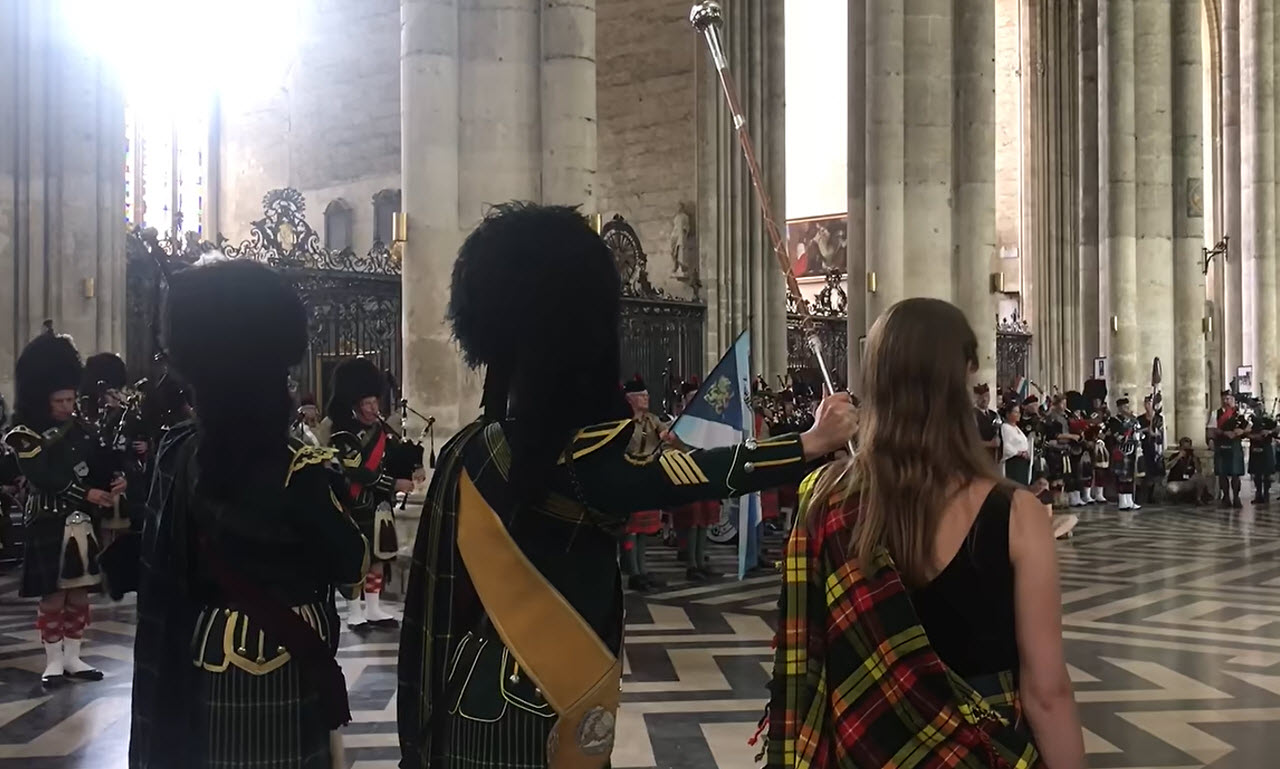
But nobody was ready for the sheer volume about to hit them. A quiet solo was about to turn into a wall of sound that shook the entire structure.
One voice started the melody, and four hundred instruments waited in total silence.
The singer was English soprano Emma Brown. She stood beneath the high Gothic arches of Amiens Cathedral. And she began singing Amazing Grace completely unaccompanied.
Her clear voice carried across the room. It bounced off the stone walls and settled into the rafters.
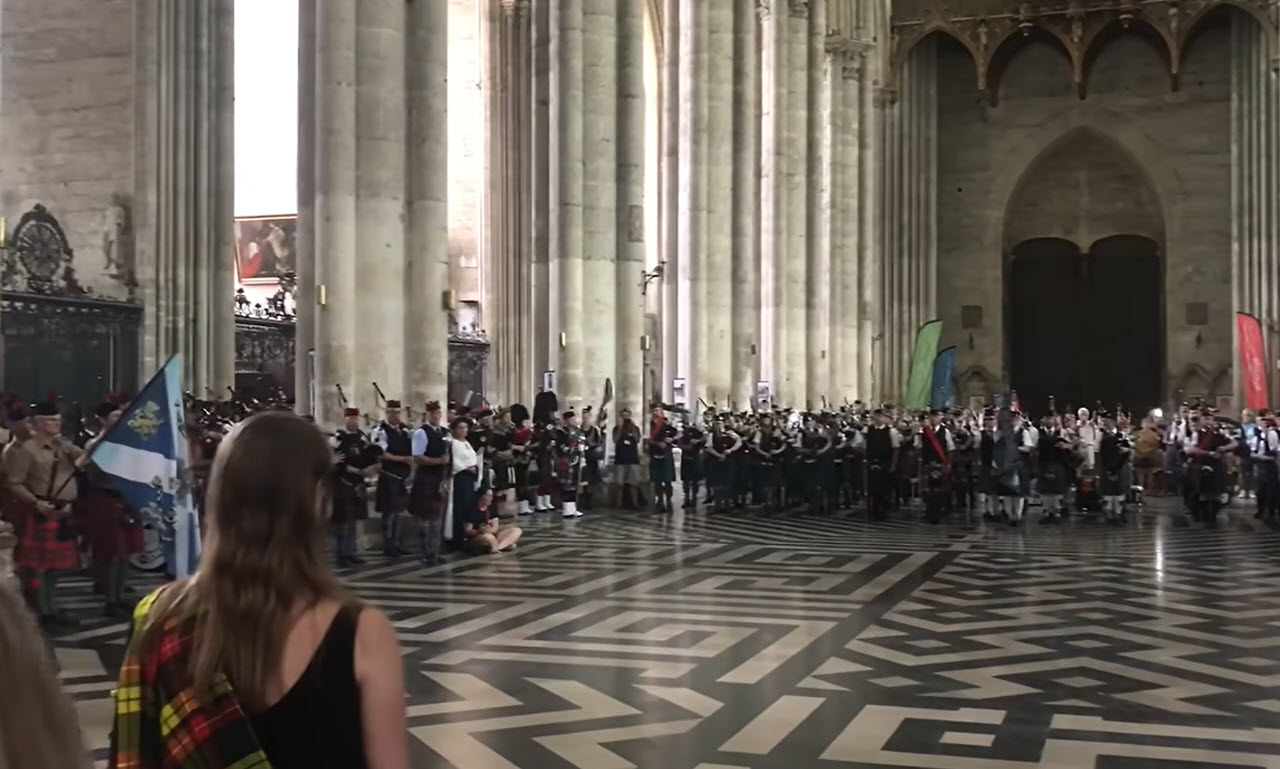
For a few seconds, she held the entire crowd on her own. Then the arrangement shifted. Pipe Major Tom Jamieson stepped in next, bridging the gap between a single human voice and what was waiting behind him.
Four hundred bagpipers stood ready across the cathedral floor, waiting for a single cue.
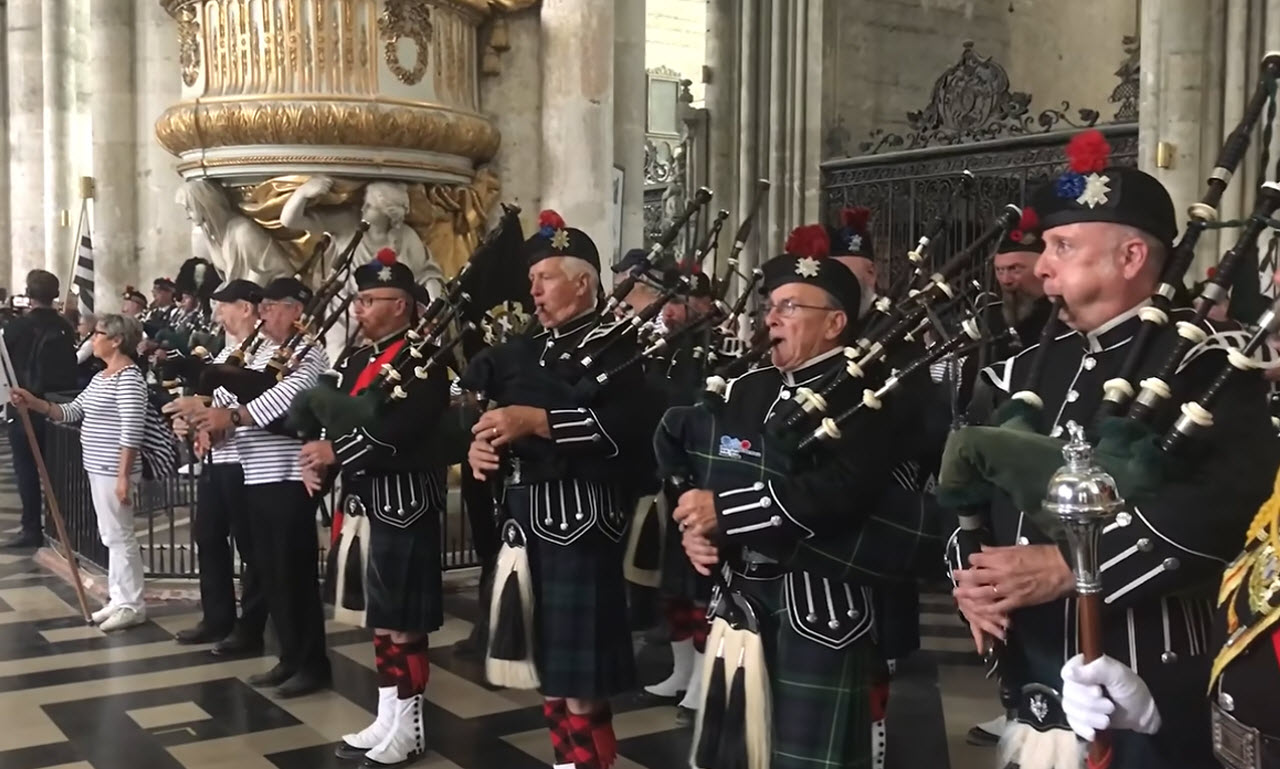
Drum Major Derek Dean gave the signal. Suddenly, roughly 400 pipers and drummers joined in at full volume. The shift in energy was instant and overwhelming.
The French band Samarobriva Pipes and Drums organized the event. They called it United Pipers for Peace. Musicians came from Scotland, England, France, and other parts of Europe.
Traditional Scottish pipe bands stood next to Breton bagads and solo players. They all played the exact same notes in unison. The sound filled every corner of the UNESCO World Heritage Site.

The location carried serious weight. Amiens sits right near the old battlefields of the Somme, where hundreds of thousands of soldiers died a century earlier.
Playing those instruments inside those specific stone walls meant something real to the people there. It was a direct nod to the generation lost in those fields.
The song itself has a long paper trail. English clergyman John Newton wrote the lyrics back in 1779.
People did not pair his words with the familiar New Britain tune until an American songbook printed them together in 1835. Decades later, the melody found a permanent home on the pipes.
In 1972, the Royal Scots Dragoon Guards released an instrumental version. It sat at number one on the UK Singles Chart for five straight weeks and introduced millions to the sound.
A video of the 2018 Amiens performance eventually landed on YouTube, and millions of strangers clicked play.
Emma Brown was the right person to anchor the 2018 performance. Raised in Nottingham, she studied music at the University of Cambridge. She later trained in singing and composition at the Royal Conservatoire in The Hague.
Her career spans opera, live concerts, and projects focused on conflict and memory.
In 2019, she even released a recording project called Echoes of War. Her background made her steady enough to hold her own against hundreds of loud instruments.
Since hitting the internet, the Amiens video has pulled in more than 7.6 million views. People around the world keep coming back to watch the contrast unfold.
You hear one quiet voice start the piece. Then you watch hundreds of musicians from different countries lock into the exact same rhythm.
On Remembrance Sunday, the recording still circulates widely. It stands as a straightforward, powerful tribute to the people who died in the First World War.
