
Jane Goodall, the primatologist and conservationist, has passed away at the age of 91. She spent her life working to study chimpanzees and bring awareness to how much humans and chimps have in common.
The Jane Goodall Institute announced her death and said: “The Jane Goodall Institute has learned this morning, Wednesday, October 1, 2025, that Dr. Jane Goodall DBE, UN Messenger of Peace and Founder of the Jane Goodall Institute has passed away due to natural causes. She was in California as part of her speaking tour in the United States. Dr. Goodall’s discoveries as an ethologist revolutionized science, and she was a tireless advocate for the protection and restoration of our natural world.”
Many people responded online and said how sad they were to lose such a strong and inspiring figure. One person wrote: “A big, big loss in a world that so desperately needs more people like Jane.” Another wrote: “This is absolutely a loss to the entire world. We must ensure her work continues on.” Others thanked her for being a bright light and said her legacy would live on.
In a 2020 interview she talked about how surprising it was to see chimpanzees so much like humans. She said: “Their behavior, with their gestures, kissing, embracing, holding hands and patting on the back. The fact that they can actually be violent and brutal and have a kind of war, but also loving an altruistic.”
Goodall had been inspired by movies like “Tarzan” and “Doctor Dolittle” when she was young. Her first trip to Gombe National Park in Tanzania showed her that this was exactly the work she wanted for her life. She said: “It was what I always dreamed of.”
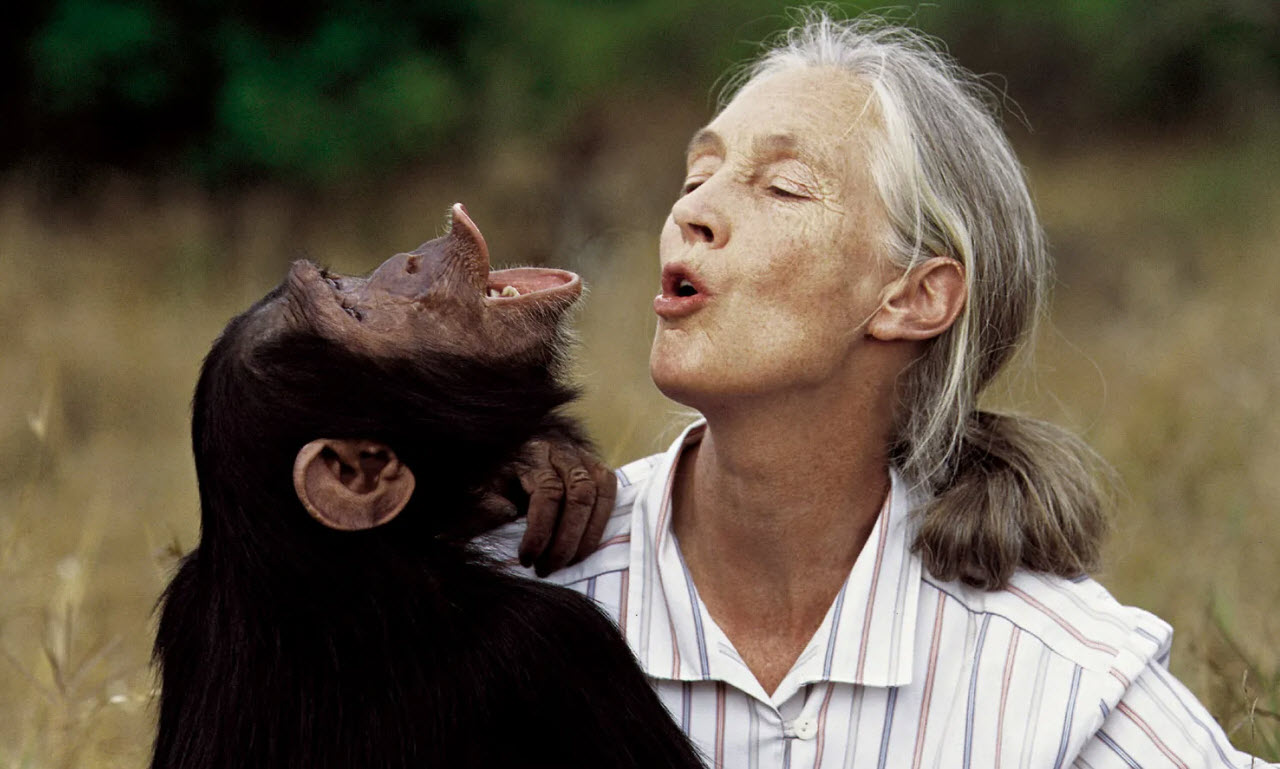
She went on to earn her PhD in ethology from Cambridge. In 1977 she founded the Jane Goodall Institute with Genevieve di San Faustino. She was later named a United Nations Messenger of Peace and even teamed up with Apple in 2022 to promote recycling. That same year a Barbie doll was made in her likeness.
Her work has encouraged many young women to follow careers in science and animal studies. From 1970 to 2011, the number of women in STEM grew from 7 percent to 26 percent, and her example helped make that happen.
