
The new season of America’s Got Talent had not even fully settled in, and people were already talking. Clips were spreading across the internet. Reactions were piling up. And one audition seemed to pull more attention with every passing hour.
A performer stepped onto the stage carrying the name Unitree Robotics. At first glance, it looked like a dance act. Familiar territory. Something the judges had seen countless times before.
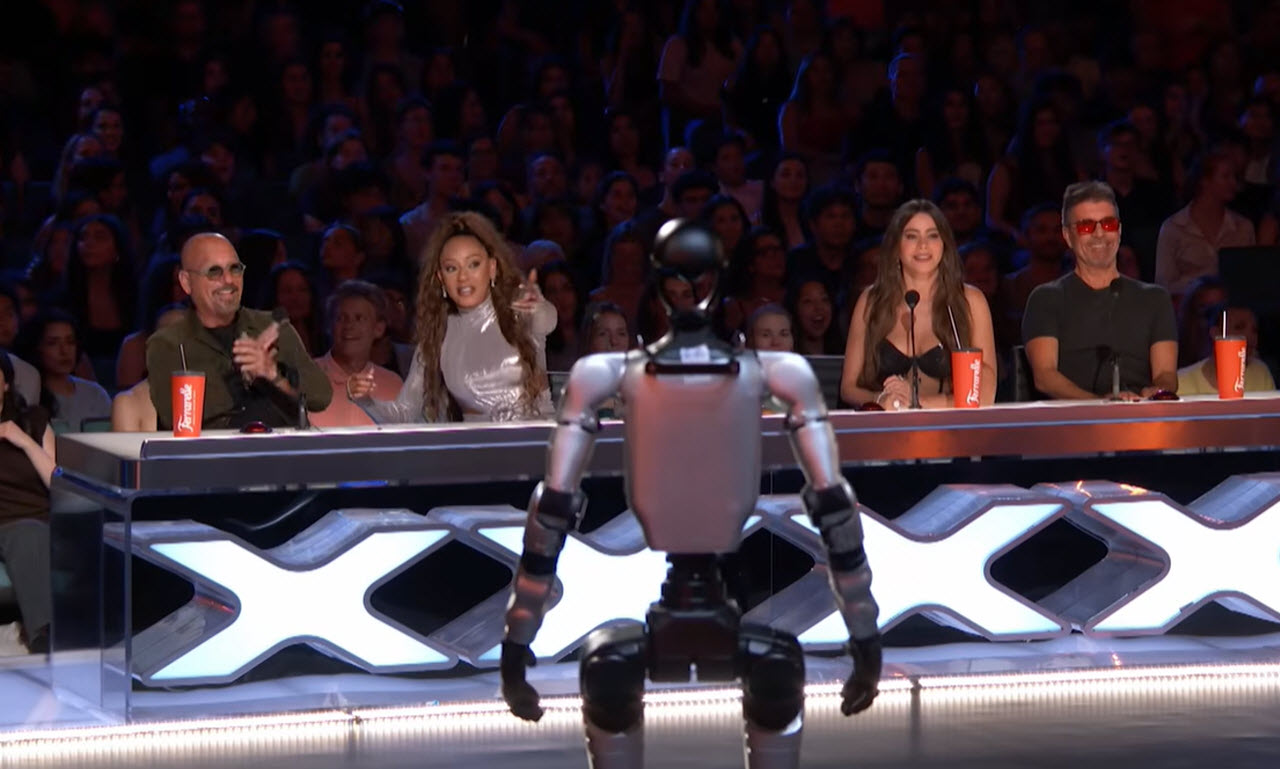
Then the backup dancers arrived.
What followed immediately shifted the mood inside the theater. The audience watched as a group of humanoid robots joined the performer on stage.
Suddenly, the act was no longer just about movement. It became a glimpse into something most people had only imagined. The routine unfolded to Lady Gaga’s “Abracadabra.”
The machines moved beside their human lead with surprising confidence. Their timing stayed locked in. Their movements appeared smooth.
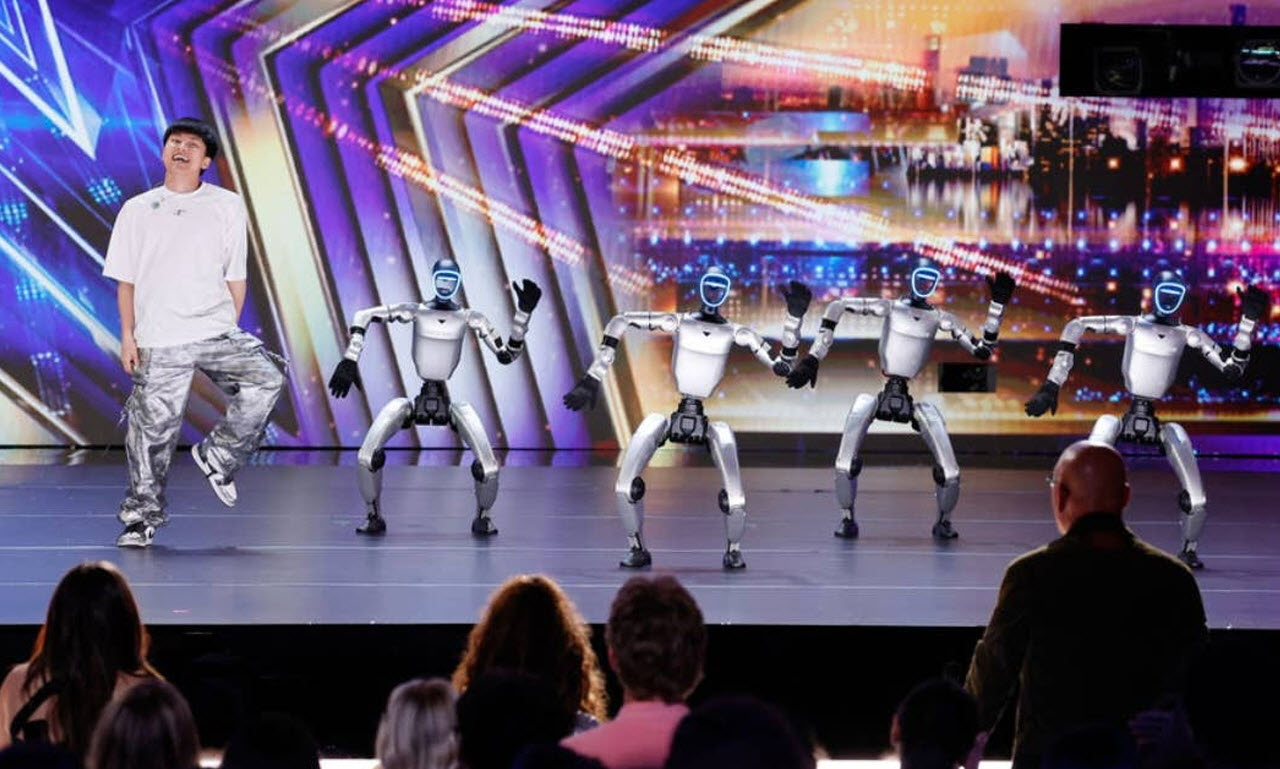
Each sequence flowed into the next, creating a performance that looked far removed from the stiff robotic motions many expected.
The longer it continued, the harder it became to look away.
Viewers were not simply watching dancers. They were watching engineering meet entertainment in real time. Every step suggested an enormous amount of planning, testing, and programming hidden beneath the surface.
Then came the moment everyone seemed to remember.
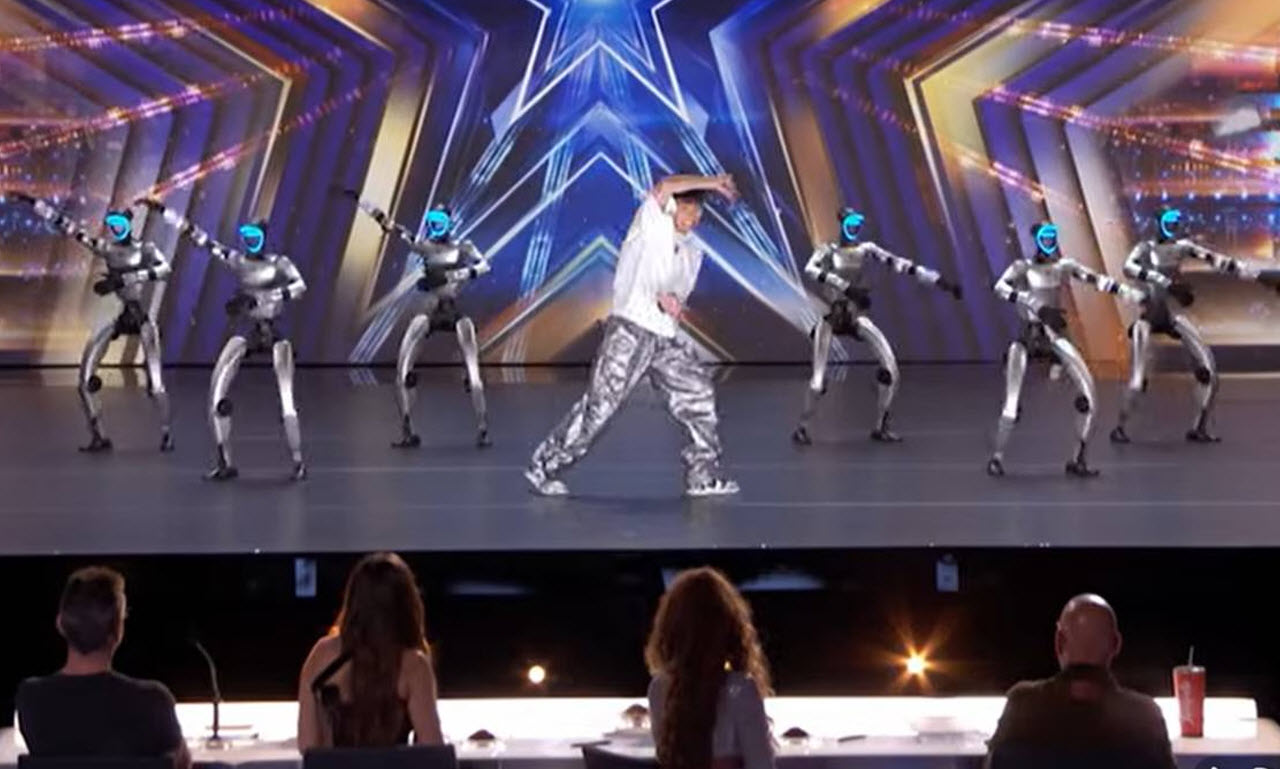
Eight Unitree G1 robots launched into synchronized sideways flips alongside the human performer. The movement happened with remarkable precision. No hesitation. No visible mistakes. Just a clean execution that instantly changed the energy in the room.
One viewer summed up the reaction perfectly, saying, “That was when my jaw just dropped. 8 robots doing a sideways flip in perfect synchronisation. This is amazing, brilliant, everything.”
That single sequence became the center of countless conversations.
Many people understood how difficult robotic balance could be. Videos of robots losing stability and crashing to the ground had circulated online for years. Because of that history, the performance felt even more impressive to those watching.
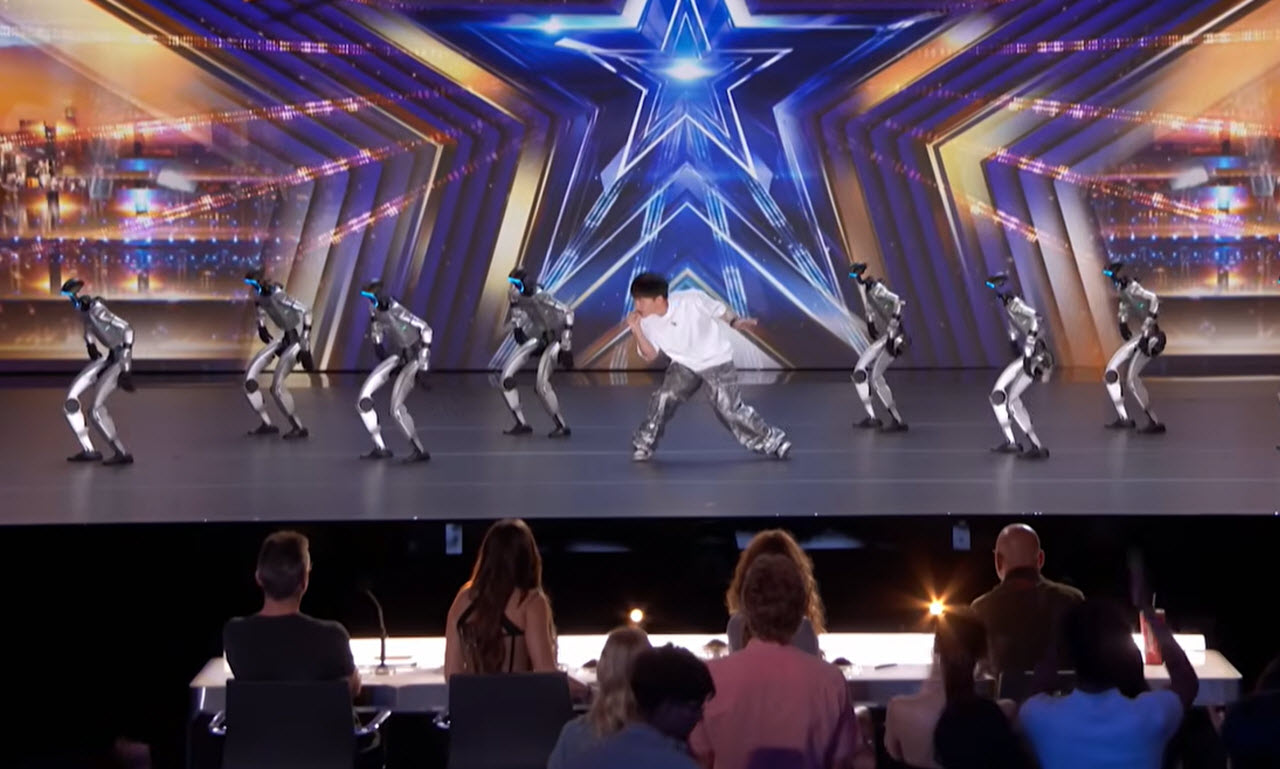
“I’ve seen so many videos of these robots falling face first onto concrete and completely wiping out. They’re not easy to control at all. To program them so precisely that they can match the energy, timing, and movements of a performance like that takes a huge amount of skill and talent in its own way. So once again, I absolutely loved it.”
The conversation was no longer only about dancing. People began talking about the technology itself. The act challenged assumptions.
Robots were often associated with rigid movement and awkward motion. Here, they appeared coordinated, agile, and surprisingly expressive.
That expectation shattered faster than anyone anticipated.
One commenter captured that feeling directly, writing, “If anyone told me robots can dance, I would’ve not believed them. This was a surprise.”
The judges appeared just as entertained as the audience. Even Simon Cowell, known for his critical eye, seemed stunned by what had unfolded in front of him.
The panel embraced the performance and even joked that any mistakes would have been made by the human dancer rather than the machines.
Then another robot helped win over the room.
The introduction of Jackie, the karate-kicking robot, added a playful moment that further connected the act with both judges and audience members. Howie Mandel even joked about wanting to take one of the robotic performers home.
Four votes stood between the act and the next round. All four judges delivered a yes.
Yet the discussion did not end there. As praise poured in online, another question quickly emerged. Many viewers believed the routine deserved even more recognition. The absence of a Golden Buzzer became its own debate.
One fan expressed the feeling shared across countless comments, saying, “Come on, that was golden buzzer worthy.”
And with that, the performance left behind something bigger than applause. It left people wondering what Unitree Robotics could possibly do next.
