
The sky above Manhattan looked clear that morning. Inside the North Tower, Michael Hingson sat at his desk, unaware that disaster was racing straight toward his office window.
Blind since birth, he navigated life through sound and preparation. Underneath the desk rested Roselle, his yellow Labrador guide dog, resting quietly before the sudden disruption arrived.
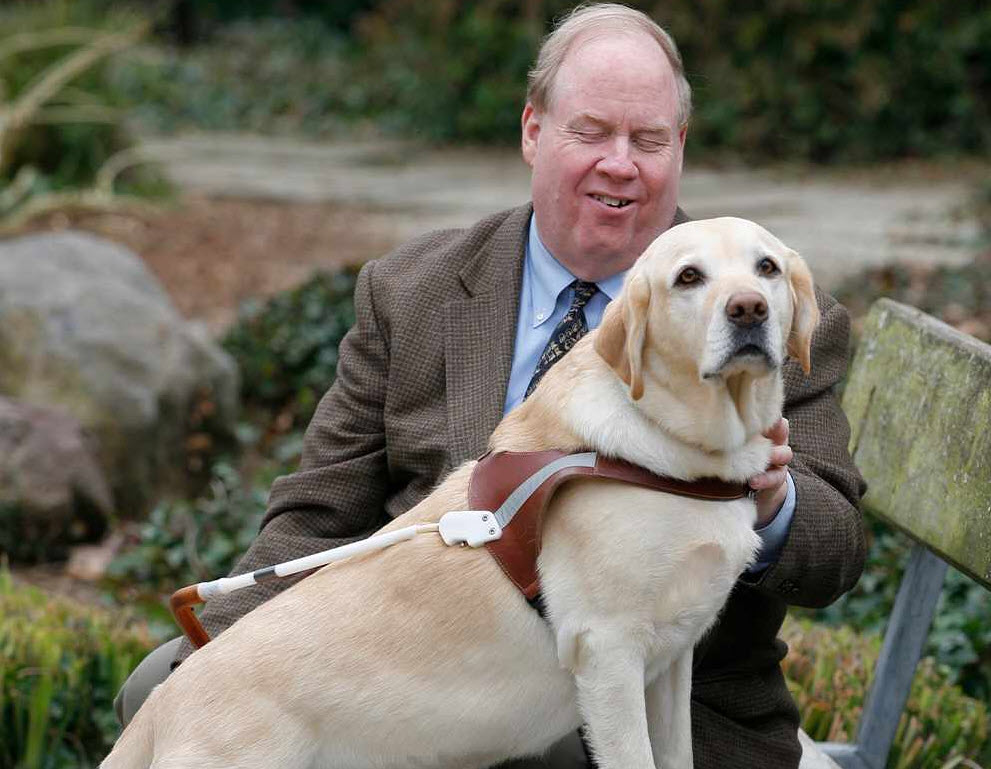
Every familiar sound vanished the moment the entire tower violently tilted, throwing furniture across the floor and shaking them from their chairs.
American Airlines Flight 11 slammed into the upper floors of the World Trade Center. The impact sent violent shockwaves across the 78th floor, spreading panic through the hallway.
Michael sheltered in place initially, listening to the spreading chaos. Once reality settled, he knew remaining on that high floor meant certain death for him and his companion.
Trapped nearly eighty stories above the street, the only way forward meant stepping blindly into a dark, crowded staircase.
He took hold of the harness, relying on training. Long before that morning, he had studied the evacuation routes, knowing regular exits would fail in a severe emergency.
Roselle stood calmly without fear. Together, they navigated through the crowded doorway toward the central stairwell, where the long journey downward through narrow concrete steps began.
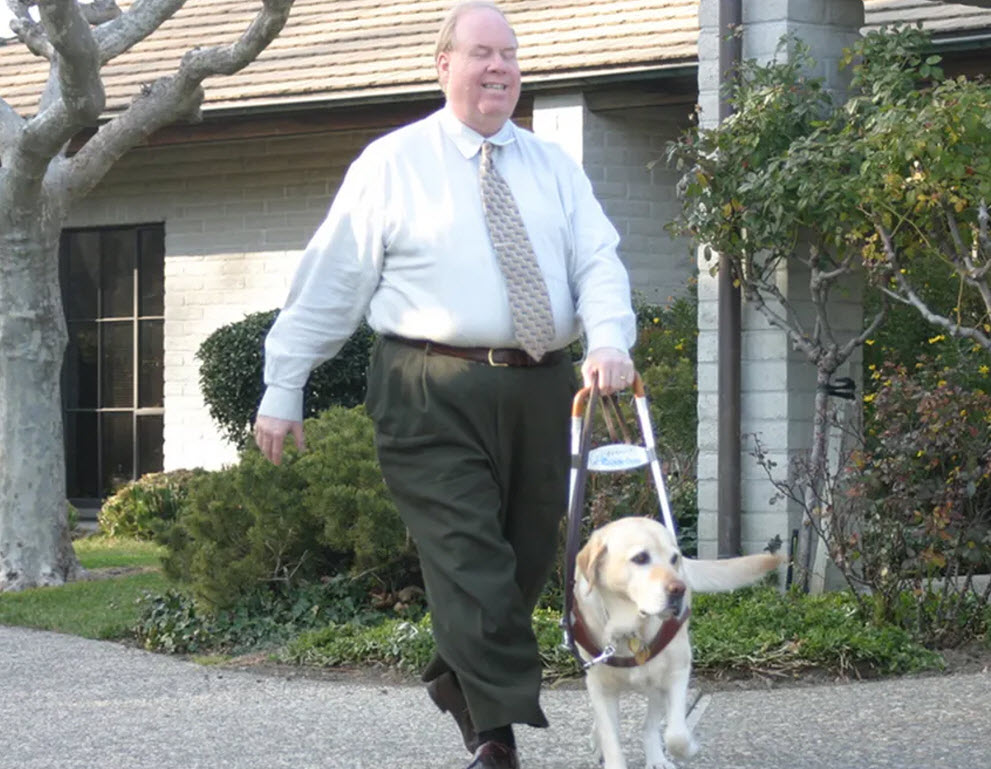
Nearly 1,500 unforgiving concrete steps stood between the blind traveler, his guide dog, and the distant safety waiting below.
Dozens of fleeing workers joined the descent down the crowded stairs. Smoke drifted through the shaft, and frightened voices echoed against the walls as people struggled to keep moving.
Terror spread when a colleague beside Michael became convinced they were going to die. That wave of panic threatened to freeze the entire line of workers on the stairs.
One sudden wrong reaction on those crowded stairs would trigger complete disaster for everyone desperately trying to escape the burning building.
Instead of giving in to panic, Michael kept his composure intact. He spoke calmly, kept his feet moving, and urged everyone around him to focus on taking the next downward step.
Roselle anchored the rescue through unwavering discipline. She never pulled frantically, steering Michael smoothly forward while he gathered critical updates from the evacuees walking beside them.
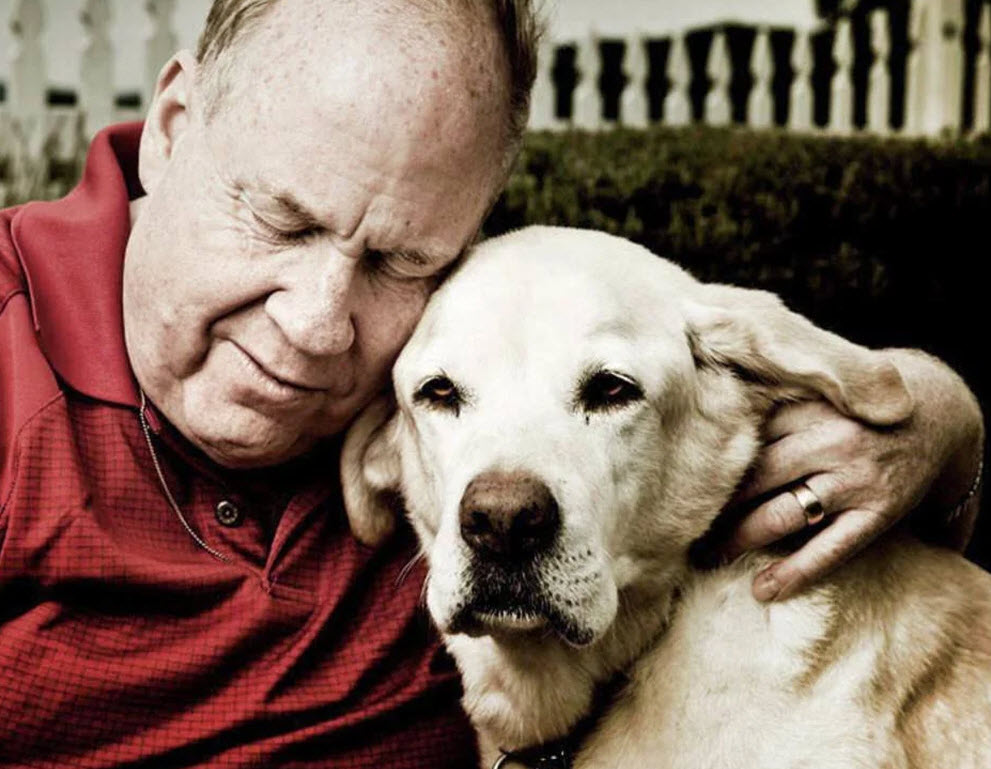
Step by slow step, the brave dog guided her partner through the suffocating air, never wavering as the entire world crumbled around them.
An hour of tense descent dragged on before they reached the ground. They pushed through the final exit into the Manhattan streets, feeling temporary relief after the long trek downward.
Safety remained completely out of reach. As they moved away from the complex, the South Tower collapsed, sending an enormous cloud of dust and debris tearing through the surrounding avenues.
The sudden structural collapse turned the bright morning sky into a roaring blizzard of ash, blinding everyone on the streets.
Chaos swallowed the streets as thick darkness covered the city. Michael held the leash tightly, relying on Roselle to navigate the swirling debris until they finally reached a protected area.
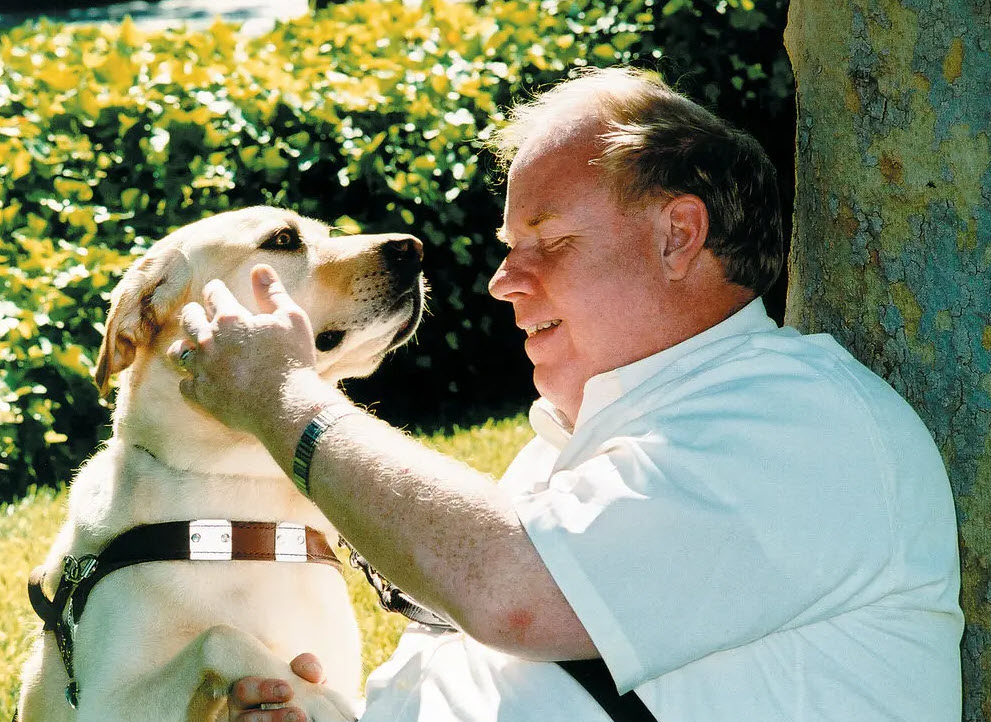
Both escaped the historic catastrophe because of their bond. Roselle gained worldwide recognition for her heroic actions, proving that discipline and devotion can withstand the greatest disasters.
Their extraordinary quiet partnership became an enduring symbol of survival when the entire nation needed hope the most.
Michael traveled the globe in the following years to share their story. He spoke about teamwork, preparation, and deep trust that carried them down through the burning skies of lower Manhattan.
That fateful descent proved that true leadership does not require eyesight. When terror struck, quiet faith between a man and his loyal guide dog showed the world how to survive the darkest hour.
