
Meghan Markle stood before a mirror in Montecito. She wanted a quiet moment with her four-year-old daughter, Princess Lilibet.
The Duchess of Sussex lived behind high walls since leaving London in 2020. She guarded Archie and Lilibet, keeping public glimpses rare.
Every private choice was about to face a harsh microscope.
Years of intense scrutiny taught her family to hold boundaries. But every tiny glimpse into California ignited fresh online hostility.
Past images of Archie and Lilibet prompted quick complaints. While fans called them sweet, critics argued, “As ever, both faceless phantoms.”
Hostility was familiar for her home. In her documentary, she recalled violent threats like, “Meghan just needs to die. Someone needs to kill her.”
Tension between safety and publicity had simmered for years.
She knew the digital world intimately. On a podcast, she remarked, “We all know what it feels like to have our feelings hurt,” warning of deep trauma.
Archewell Philanthropies pushed child safety onto the global stage. Meghan flew to Geneva for World Health Assembly week, meeting grieving parents.
There, she joined WHO Director General Dr. Tedros Adhanom Ghebreyesus at the Lost Screen Memorial, an installation honoring youths lost to online abuse.
Fifty glowing screens stood in silence to honor stolen young lives.
Her speech called for urgent change. She told the crowd, “Our children are not products, they are not experiments and not expendable,” demanding tech regulation.
Prevention was her central theme. She declared, “Children must be safe by design, not safe by chance,” urging governments and tech firms to act immediately.
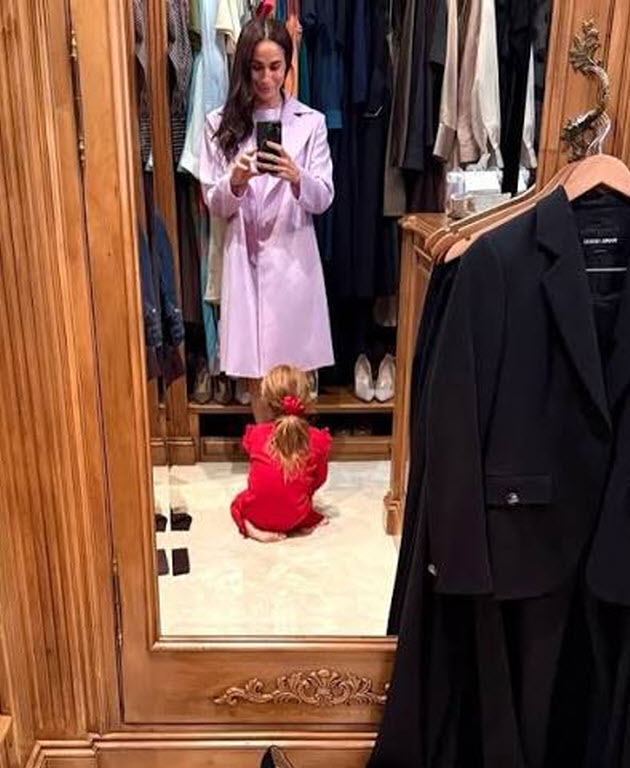
Hours before her Geneva appearance, Meghan posted a mirror selfie from her walk in closet. Princess Lilibet sat on the floor, surrounded by designer heels.
A single morning photo was about to overshadow the entire mission.
The four-year-old handled her mother’s shoes, her auburn hair visible as she looked away. Meghan captioned the image, “Mama’s little helper,” with an emoji.
Outlets noted Meghan wore a lilac dress in Geneva chosen by Lilibet, tying the closet photo to her public humanitarian appearance.
Anger spread across social feeds within minutes. Critics labeled the upload tone deaf, with one user raging, “This is disgusting,” across multiple threads.
Social media erupted before the conference had even concluded its panels.
Another critic lashed out, writing, “Don’t use your kids on social media, then go and give a speech about the dangers of social media for children.”
Commentators called the juxtaposition hypocritical. They questioned posing in a luxury wardrobe while preparing to speak about children killed by digital harm.
Royal commentator Tom Sykes argued that hiding a face still fuels public fascination, pulling young Lilibet into a media spotlight without real consent.
The core debate turned on consent and carefully crafted celebrity images.
Supporters immediately rushed to her defense. They insisted sharing a controlled family snapshot was entirely different from algorithmic harm or exploitation.
One defender argued, “Pretty stupid if people can not see the difference between a child’s pic not showing her face and the ongoing manipulation.”
Other loyal fans praised her boundaries, writing, “I love how she can take great photos without exposing her children’s faces,” calling the post adorable.
The divide between fierce critics and devoted supporters only grew deeper.
California remains a sanctuary, but every digital post invites intense scrutiny. A quiet shoe moment turned into a fierce clash over privacy and modern fame.
In the end, public opinion remains split. Some see an innocent motherly tribute, while others see a contradiction that will follow her for years to come.
