
Disclaimer: This article is for informational purposes only and is not medical advice. Always consult a qualified healthcare professional regarding any medical concerns or treatment decisions.
The scratching started exactly eight weeks ago. It was just a small red mark on his arm at first. But then the patches spread across his skin.

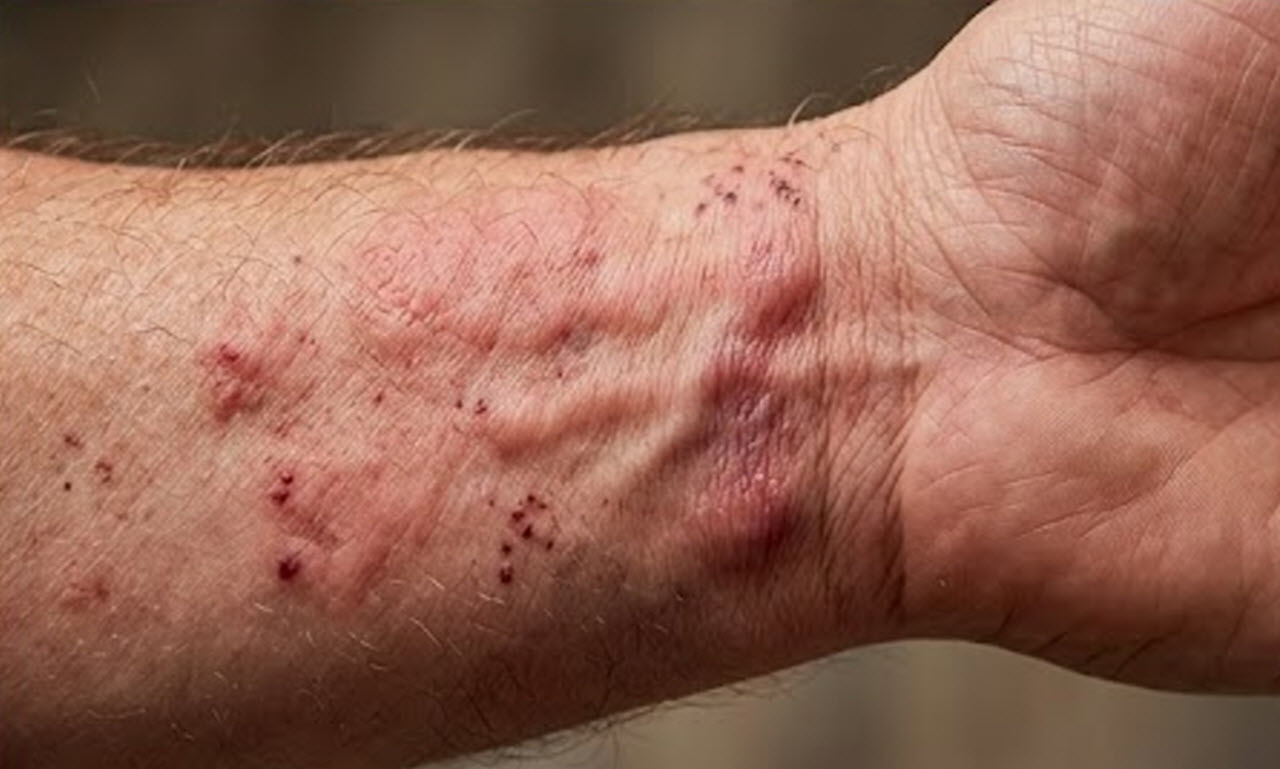
They were raised and intensely itchy. Some looked like small round circles. Others joined together to form massive angry rings across his chest.
Every single time he rubbed his skin the welts multiplied. It looked like a horrific map spreading over his entire body.
And the worst part was the total helplessness.
A mother had to sit there and watch her son burn from the inside out. It was a relentless nightmare that seemed to have no end.
It turns out that one in five people will face this exact terror at some point. The medical world calls it urticaria.
Inside the bloodstream cells called mast cells start misbehaving. They release an absolute flood of histamine and other chemical mediators.

Suddenly, the tiny capillaries under the skin begin to leak fluid. That fluid traps itself under the surface and creates agonizing hives.
The marks usually vanish from one spot within twenty-four hours. But that brings absolutely zero comfort to a suffering child.
Because as soon as one welt fades, three more explode into view somewhere else. The cycle just keeps repeating day after day.
But then the swelling shifted away from his arms and legs.
Suddenly his lips looked heavy and distorted. His eyelids began to puff up until he could barely see through the slits.
This deep hidden swelling is known as angio oedema. It targets the softest parts of the body like the mouth and throat.
It does not itch like regular hives. Instead it brings a deep boring pain that leaves a child weeping in the middle of the night.
Sometimes this terrifying swelling happens completely on its own without a single hive. When that happens, it can be a hereditary condition.
That means it requires completely different blood tests and specialized treatment to stop the damage.
For most people, the nightmare is over quickly. They suffer from acute urticaria, which strikes fast but vanishes within six weeks.
The triggers for these sudden attacks are usually easy to track down. It might be a bad reaction to peanuts, shellfish, or milk.
It could be a sudden sensitivity to common medications like penicillin or ibuprofen. Even a simple common cold can trigger the chaos.
But his clock had already passed the six week mark.
When the burning and the welts last longer than six weeks the diagnosis changes to chronic urticaria. This is where the true panic sets in.
Doctors cannot find a definitive trigger in up to ninety percent of these chronic cases. The source is a total mystery.
The body essentially turns on itself. The immune system sends out autoantibodies that bind to receptors and force a constant leak of histamine.

The constant itching destroys any hope of a normal life. It robs a child of sleep and leaves an entire household in emotional turmoil.
Normal medicine fails to stop it. Patients are forced onto massive doses of antihistamines and intense immunosuppressive drugs.
Sometimes the environment itself becomes the enemy. Physical stimulation, like light scratching, can leave permanent elevated tracks on the flesh.
Sudden contact with cold air or ice can cause a life threatening reaction. Even the heat from a warm bath or emotional stress triggers a flare.
But a dark boundary exists where waiting is no longer an option.
When the swelling moves into the tongue and throat the situation becomes a critical emergency. Dizziness settles in. The chest tightens up.
These are the silent warnings of anaphylaxis. It is a swift condition that can end a life in a matter of minutes.
The only way forward is a meticulous daily diary of every food and stressor. Relief only comes when you finally uncover the hidden trigger.
